Showing posts with label Google+. Show all posts

Monday, 1 September 2014

Study: Social networks are making you distrustful and unhappy


Facebook's 2012 experiment, while controversial, showed that what other people post on social media can alter moods. Apparently, though, that's not the only thing Facebook, Twitter, Instagram and others of their ilk can do: according to a study by two European researchers, social media could also affect how satisfied people are with their lives. Fabio Sabatini from the Sapienza University in Rome and Francesco Sarracino from STATEC, the government statistics agency of Luxembourg, paired up to crunch data from a huge survey (seriously, there were 50,000 responders) conducted in Italy. That survey asked participants how satisfied they are with their current lives, how often they meet with friends, whether they trust people and what they typically do on the internet.
Based on the answers they got, the duo concluded that people tend to feel more satisfied with their lives and to be more trusting of people if they often meet with friends in person. Obviously, that's not something you can do through the internet, so those who spend a ton of time on social networks are more inclined to be leery of other people. Sabatini and Sarracino also blame all the discrimination and hate speech online, in particular, for planting the seeds of distrust in social media users. In all, the study finds the overall effect of social networking on individuals to be "significantly negative" despite its power to keep people connected.

Wednesday, 20 August 2014

AT&T's gigabit internet beats Google Fiber to Silicon Valley

   California Daily Life

Well, this has to be awkward: the first company to bring gigabit internet to Silicon Valleyisn't Google, it's AT&T. The telco's ultra-high speed U-verse service will land in Cupertino in a few months, meaning that Apple employees (or any other subscribers in the area) will be able to test AT&T's claim that you can download 25 songs in a single second sometime soon. AT&T's senior VP of U-verse Eric Boyer tells Bloomberg that bringing Gigapower to the city is a "no brainer" considering how intrinsic bandwidth is to the area. For its part, Google has plans to expand Fiber's rollout into nearby San Jose, but when that'll happen is anyone's guess -- maybe this could, ahem, speed that along.

Saturday, 26 July 2014

​The Tesla Model S doesn't have onboard navigation in China


Take a Tesla Model S for a spin in the US or Europe, and you'll have the help of a integrated navigation system to help you find your way. In China, you'll have to unfold a traditional,paper map. Local drivers are learning that the country's aversion to Google services keeps Tesla from employing its usual map solution, leaving the sedan unequipped to guide its users through the streets of Shanghai. It's an unfortunate situation, but it won't last forever -- Tesla says that it's working on a solution that supports Chinese voice and text recognition, and expects to update cars in the Chinese market with navigation features later this year. Check out Asysha Webb's ChinaEV blog at the source link below for Tesla's full statement.

Thursday, 24 July 2014

Google banks on its own tech to protect Chrome users from another Heartbleed

   Google New Laptop

Last month Google said that it was tired of mashed-together bug fixes for OpenSSL and decided to create its own fork called BoringSSL. It has now implemented that variant in the latest Chromium build, the open-source software that eventually arrives in Chrome. OpenSSL is software used for secure connections -- created largely by volunteers -- and an overlooked code problem recently caused the infamous Heartbleed bug. When BoringSSL was first announced, there was some grumbling from the security community about yet another flavor of SSL. But Google said that with over 70 patches now in OpenSSL, it was becoming much too unwieldy to implement in Chrome. It added that it wasn't trying to replace OpenSSL and would continue to send any of its own bug fixes to that group. It'll likely be implemented in the next version of Chrome, but you'll be able try the beta soon here, if you're feeling lucky.

Google Voice offers web-based calls through Hangouts, no G+ profile needed


The rumor is that eventually we're going to see Google Voice merged completely into Hangouts, and that's getting even closer to becoming reality. You can now make phone calls via Hangouts directly from the Google Voice website, no Google+ necessary. As Mountain View's Alex Wiesen notes on G+, the new feature is listed as an option in the "phone to call with" drop-down box. It seems a bit minor, sure, especially when you consider that Hangouts is already how you make phone calls from within Gmail -- but any updates for the oft-neglected service are welcome, right?

Google Maps' new, context-savvy local guide reaches Android


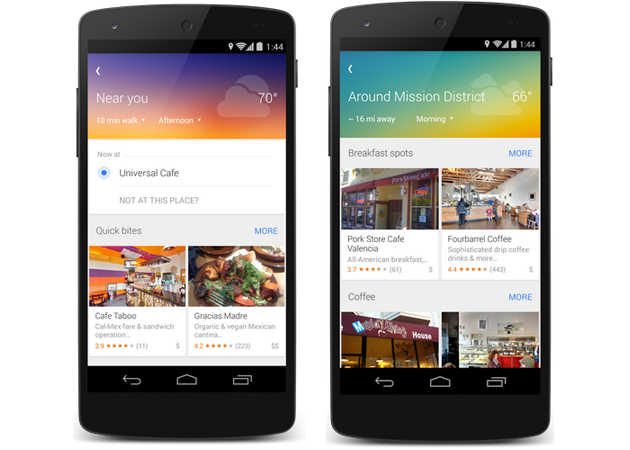
Google quietly slipped out a big upgrade to Maps' local discovery features on iOS a couple of weeks ago, and today it's Android's turn. Once your device gets the refresh, you should see a new Explore guide that offers suggestions for things to do based on both context and your tastes; it knows not to point you to a nearby park when it's raining, and can suggest breakfast spots the night before you need them. In that sense, Google Maps could become a solid alternative to familiar location-based recommendation apps like Yelp and Foursquare. Don't be surprised if it takes some time for Explore to arrive, though. It's just starting to reach Android this week, so you may have to rely on other tools for a little while longer.

Wednesday, 23 July 2014

YouTube star sued for copyright to the tune of $150,000 per song

   judges gavel and law books...

Most YouTubers just get a takedown notice if someone reports them using copyrighted tunes with their videos. But when that user is a huge star on the video portal like make-up guru Michelle Phan, who has almost 7 million subscribers and was even featured on YouTube's TV ad campaign, then things get a bit more intense. Electronic dance record label Ultra Music (home to Deadmau5 and other popular artists of the genre) just slapped Phan with a copyright infringement lawsuit, which accuses her of using 50 tracks released under the company without permission. Ultra wants Phan to pay $150,000 for each instance, claiming she profited from its artists' music, most likely because 1.) she's a YouTube partner, and 2.) the fame she gained on the website eventually led to lucrative deals with cosmetics companies Lancôme and L'Oreal.
Phan's adamant that she didn't do anything wrong, though, and her spokesperson told the BBC that Ultra gave her permission to use the company's tracks as background music for her make-up tutorials. While we've yet to find out which side is telling the truth, one of the label's own artists, American DJ Kaskade, defended her and lambasted existing copyright laws on Twitter at the same time:
Summary: I’m not suing @MichellePhan + @ultrarecords isn’t my lapdog. I can’t do much about the lawsuit except voice support for her.

I wrote that all of one month ago. Copyright law is a dinosaur, ill-suited for the landscape of today’s media.

eBay brings its RedLaser barcode-scanner app to Google Glass


You might know eBay as the website where you can buy a rare NES game for a hundred grand, but the company also has its own barcode scanner, called RedLaser. It's been out on Android and iOS for a while, and now the company is bringing it to Google Glass, allowing you to quite literally buy whatever you set your sights on. Like the existing app, the Glass version scans barcodes and spits back a list of current prices at different retailers. From there, you can find a brick-and-mortar store nearby, complete with directions, if you need them. And, of course, like any good online retailer, eBay will show a list of related products, similar to whatever it is you just searched for. All told, we're guessing you can probablyspare a few minutes to stop what you're doing and use the phone app instead, but let's be honest: Scanning stuff with your eye sounds pretty fun. Just be aware, though, that if you want to purchase something, you will in fact have to pick up your phone -- the app will send an email notification to your mobile device so you can complete the transaction.

Tuesday, 22 July 2014

Quantum computing firm calls 'bullshit' as scientists undermine its technology

   D-Wave quantum computer

How do you evaluate a quantum computer you just bought from D-Wave for $15 million? It's not easy, especially since no one can really understand how the machine -- with its ones, zeros and superpositioned "one-and-zeros" -- actually functions. Instead, all you can do is throw increasingly complex questions at it, and hope that it answers them quicker than a top-end classical computer. This quest for evidence of so-called "quantum speeedup" has been going on for a while, with little in the way of positive results. Now, a freshly-published collaborative study involving Google (owner of a D-Wave box), Microsoft (owner of some very advanced traditional tech), and a team of university scientists, has achieved new results that are equally disappointing. Science magazine describes the study as "the fairest comparison yet." D:Wave's founder, meanwhile, has described it as "total bullshit."
The dispute partly arises over the choice of questions that were run through each type of machine. The latest study deliberately used questions that both computers could readily answer, and D-Wave claims that these were too simple. The company has also pointed out that it's a "scrappy startup," whereas the rival classical machine had the benefit of decades of research and trillions of dollars of investment, so it's pretty remarkable that the quantum computer was even able to keep up. By contrast, the university-backed researchers say that their comparison was based on challenges that were tailored to be extremely easy for qubit-based processing, so there could and should have been evidence of speedup if quantum mechanics are truly being exploited.

It's not clear where things will go from here. The study has a conclusive-sounding tone, as does one of its lead researchers, Matthias Troyer from the Institute of Theoretical Physics in Zurich, who simply says "we don't see quantum speedup." Then again, Troyer acknowledges that other sorts of tests may reveal the phenomenon "eventually." Perhaps the onus is now on D-Wave to find some way to silence the skeptics, not just by keeping up with standard technology, but by surpassing it in a meaningful way. Whatever happens next, it sounds like relations between D-Wave and the scientific community are becoming fractured -- and that sort of tension will either speed progress up, or slow it right down.

Pranksters can hijack your Chromecast to show whatever they want

   Chromecast

It's easy for someone in your home to interrupt your Chromecast stream and play something of their own, but you can always retake control... right? Well, don't count on it. Analyst Dan Petro has built the Rickmote Controller, a proof-of-concept device that hijacks Google's media stick to play everyone's favorite Rick Astley video (and theoretically, any media) on loop. The Raspberry Pi-based box simply floods the Chromecast with WiFi disconnection requests, kicking the adapter into its setup mode; after that, it's easy for the Rickmote to make its own connection and deliver non-stop '80s pop.

You might not see a fix for this behavior any time soon. Part of the Chromecast's appeal is its easy configuration, and altering the disconnection response might create more headaches than it solves. As it stands, you won't have much reason to worry. Even if pranksters build gadgets like the Rickmote, they'd still have to get within range of your Chromecast's WiFi -- if someone tries to rickroll you through your TV, you'll probably catch them in the act.


Google now lets you comment on Photo Spheres

    A Grand Canyon Photo Sphere

Google's Photo Spheres can sometimes be a marvel to behold, but it's not always easy to let the photographer know about it; if you stumble across a picture in the Views portal, for instance, you may be stuck. Or rather, you were stuck. Google has just added commenting and +1s to Views, making it easy to praise someone's immersive landscape shot or offer some constructive criticism. The addition probably won't turn the image hub into a hotbed of activity. However, it might get you to revisit some of these 360-degree panoramas well after the novelty has worn off -- including your own.

Chromebooks can get cheaper thanks to new support for a low-end chip

   Chromebook
You can pick up a Chromebook for a dirt-cheap $200, if you know where to shop. However, there are now signs that these Google-powered portables could get even cheaper. MediaTek has contributed code to Chromium OS (the base for Chrome OS) for a test device with an entry-level ARM Cortex-A7 processor -- a big step down from the relatively inexpensive Cortex-A15/A7 hybrid that Samsung uses, not to mention the Intel Celeron chips in other Chrome devices. Theoretically, this leads to Chromebooks and Chromeboxes that cost significantly less than $200, albeit after a big speed hit. Just as with phones and tablets, a Cortex-A7 system is likely to be pretty sluggish.
MediaTek hasn't discussed what it's doing with the code, and it could be a while (if ever) before there's hardware you can buy. However, it's not hard to see why the semiconductor firm would want to support Chrome gear. The company's chips are seemingly omnipresent in the basic smartphones seen across developing markets like China and India. Support for a starter Cortex-A7 processor could have a similar effect in the PC world, bringing Chrome OS systems to people who might not otherwise get a computer at all.

Chrome OS adds pinch-to-zoom for regular users, Pixel owners rejoice

  
When Google launched the Chromebook Pixel, we weren't really sure what to make of the premium device's touchscreen. Sure, finger-friendly displays were trendy, but Chrome OS just wasn't asking for the technologies: it didn't feature many touch apps, the laptop didn't launch with a gesture update and user's couldn't even pinch-zoom web pages. Now, that's changing -- to go along with more touch-enabled Chromebooks now on sale, the latest update to Chrome OS' stable channel adds a touch-enabled window manager and pinch/zoom webpage scaling.

The updated touch features have been around for a while, but Chrome OS users had to be on the "Canary" release channel to play around with the system's unfinished features until recently. Google's also been experimenting with a on-screen keyboard for some time. Put together, these features could make Chrome OS a viable options for tablets (and in the near future, convertibles like Lenovo's Yoga), though Google hasn't announced anything of that nature. Check out the company's official update notes at the source link below.


Italy tells Google it has 18 months to change how it handles your data

   Italian Parliament in Rome
Google has already drawn fire from various European nations for allegedly violating users' privacy through its unified data policy, but Italy is more than willing to join the fray. The country's data protection agency has given Google 18 months to obey local laws and change how it handles your personal info. The crew in Mountain View now has to get your permission before it creates a profile; it also has two months to honor any requests to delete your data on active servers, and six months to scrub that content from backups.
Google tells Reuters that it's going to comply with the new rules, and it should have a roadmap on officials' desks by late September. Not that it has much choice but to act -- while the internet giant can easily afford potential fines, it's no doubt eager to avoid the agony of a criminal case. However quickly the company springs into action, the new requirements will likely be welcome by privacy-minded Italians who'd rather not give Google a detailed picture of what they're doing online.

Monday, 21 July 2014

Google worker shows early-draft glimpse of Chrome OS

   Google worker shows early-draft glimpse of Chrome OS
The Chrome OS is in for a future look. Athena, a Chromium OS project, will bring forth the new Chrome OS user experience. Google's François Beaufort on Friday, referring to the screenshot he posted, said," As you can see below, the first draft consists in a collection of windows with some simple window management." Beaufort was displaying a work-in-progress look on Google+. The team is currently experimenting, and Beaufort also shared instructions for people who want to take a look at the new design in the Chromium source code. Andrew Cunningham in Ars Technica summed up what the screenshot tells us about Google's work on it thus far. The new UI "displays a cascading stack of cards, each of which appears to represent an individual browser tab. At the bottom of the screen, an app drawer full of dummy icons and a Search field will allow the user to jump quickly into other applications." Although Google-watchers who are viewing and commenting on his post do realize this work is not yet in its final stage, numerous reactions to Friday's screenshots indicated reactions that were mixed.

Read more at: http://phys.org/news/2014-07-google-worker-early-draft-glimpse-chrome.html#jCp

The Chrome OS is in for a future look. Athena, a Chromium OS project, will bring forth the new Chrome OS user experience. Google's François Beaufort on Friday, referring to the screenshot he posted, said," As you can see below, the first draft consists in a collection of windows with some simple window management." Beaufort was displaying a work-in-progress look on Google+. The team is currently experimenting, and Beaufort also shared instructions for people who want to take a look at the new design in the Chromium source code. Andrew Cunningham in Ars Technica summed up what the screenshot tells us about Google's work on it thus far. The new UI "displays a cascading stack of cards, each of which appears to represent an individual browser tab. At the bottom of the screen, an app drawer full of dummy icons and a Search field will allow the user to jump quickly into other applications." Although Google-watchers who are viewing and commenting on his post do realize this work is not yet in its final stage, numerous reactions to Friday's screenshots indicated reactions that were mixed.
"Chrome evangelist François Beaufort gave us a glimpse of the potential future of Chrome OS on Friday, and boy is it ugly," said a PCWorld writer. Brad Chacos, who uses a Chromebook as his primary day-to-day laptop, found it difficult to understand why a multi-windowed approach is better than the browser tabs in Chrome OS. Nate Swanner of SlashGear noticed how "The updated user interface that may be coming to Chrome OS takes a lot of cues from Android's Chrome.

"Athena is likely an overhaul to make design a bit bolder and simpler, which is the aim of Material Design. Touch-friendly use cases will make the platform more attractive to users and OEMs alike, as the popular touchscreen Acer Chromebook proves. Tying Chrome in with Android, at least aesthetically, is a nice choice, too."

Andrew Grush in Android Authority said, "While I personally think the colors used make the interface a bit ugly, we have to remember that Google is still working on the effort and that it will likely be much morerefined when it arrives to Chrome OS later this year."

That also reflected other comments, that the posting was showing something yet to be polished. Cunningham of Ars Technica wished to look at the bigger picture. "Putting aside the rough, obviously-a-work-in-progress aesthetic of the interface, it bears a strong resemblance to the new multitasking UI in the Android L release, which shows apps and individual browser tabs as a similar stack of cards."

Fundamentally, one can connect the dots in the light of Google's effort to work on a "visual language." Michael Rougeau in TechRadar commented that a common visual language for Google's various products and platforms was part of Google's plan for the future, "and today we got a glimpse of what Chrome OS looks like with a more Android-like interface."

He said, "The screenshot he shared shows a vertical card-based multitasking interface that resembles both the current Chrome tabs system on Android devices and certain aspects of the upcoming Android L update's Material Design UI."

Companies with a consistent design across multiple platforms more easily create and maintain brand recognition. Google describes Material Design as a new visual language intended to bring a consistent user experience, from smartphone, to tablet to desktop. One can expect to see its look across Google's platforms.
The Chrome OS is in for a future look. Athena, a Chromium OS project, will bring forth the new Chrome OS user experience. Google's François Beaufort on Friday, referring to the screenshot he posted, said," As you can see below, the first draft consists in a collection of windows with some simple window management." Beaufort was displaying a work-in-progress look on Google+. The team is currently experimenting, and Beaufort also shared instructions for people who want to take a look at the new design in the Chromium source code. Andrew Cunningham in Ars Technica summed up what the screenshot tells us about Google's work on it thus far. The new UI "displays a cascading stack of cards, each of which appears to represent an individual browser tab. At the bottom of the screen, an app drawer full of dummy icons and a Search field will allow the user to jump quickly into other applications." Although Google-watchers who are viewing and commenting on his post do realize this work is not yet in its final stage, numerous reactions to Friday's screenshots indicated reactions that were mixed.

Read more at: http://phys.org/news/2014-07-google-worker-early-draft-glimpse-chrome.html#jCp
The Chrome OS is in for a future look. Athena, a Chromium OS project, will bring forth the new Chrome OS user experience. Google's François Beaufort on Friday, referring to the screenshot he posted, said," As you can see below, the first draft consists in a collection of windows with some simple window management." Beaufort was displaying a work-in-progress look on Google+. The team is currently experimenting, and Beaufort also shared instructions for people who want to take a look at the new design in the Chromium source code. Andrew Cunningham in Ars Technica summed up what the screenshot tells us about Google's work on it thus far. The new UI "displays a cascading stack of cards, each of which appears to represent an individual browser tab. At the bottom of the screen, an app drawer full of dummy icons and a Search field will allow the user to jump quickly into other applications." Although Google-watchers who are viewing and commenting on his post do realize this work is not yet in its final stage, numerous reactions to Friday's screenshots indicated reactions that were mixed.

Read more at: http://phys.org/news/2014-07-google-worker-early-draft-glimpse-chrome.html#jCp
The Chrome OS is in for a future look. Athena, a Chromium OS project, will bring forth the new Chrome OS user experience. Google's François Beaufort on Friday, referring to the screenshot he posted, said," As you can see below, the first draft consists in a collection of windows with some simple window management." Beaufort was displaying a work-in-progress look on Google+. The team is currently experimenting, and Beaufort also shared instructions for people who want to take a look at the new design in the Chromium source code. Andrew Cunningham in Ars Technica summed up what the screenshot tells us about Google's work on it thus far. The new UI "displays a cascading stack of cards, each of which appears to represent an individual browser tab. At the bottom of the screen, an app drawer full of dummy icons and a Search field will allow the user to jump quickly into other applications." Although Google-watchers who are viewing and commenting on his post do realize this work is not yet in its final stage, numerous reactions to Friday's screenshots indicated reactions that were mixed.

Read more at: http://phys.org/news/2014-07-google-worker-early-draft-glimpse-chrome.html#jCp
The Chrome OS is in for a future look. Athena, a Chromium OS project, will bring forth the new Chrome OS user experience. Google's François Beaufort on Friday, referring to the screenshot he posted, said," As you can see below, the first draft consists in a collection of windows with some simple window management." Beaufort was displaying a work-in-progress look on Google+. The team is currently experimenting, and Beaufort also shared instructions for people who want to take a look at the new design in the Chromium source code. Andrew Cunningham in Ars Technica summed up what the screenshot tells us about Google's work on it thus far. The new UI "displays a cascading stack of cards, each of which appears to represent an individual browser tab. At the bottom of the screen, an app drawer full of dummy icons and a Search field will allow the user to jump quickly into other applications." Although Google-watchers who are viewing and commenting on his post do realize this work is not yet in its final stage, numerous reactions to Friday's screenshots indicated reactions that were mixed.

Read more at: http://phys.org/news/2014-07-google-worker-early-draft-glimpse-chrome.html#jCp
The Chrome OS is in for a future look. Athena, a Chromium OS project, will bring forth the new Chrome OS user experience. Google's François Beaufort on Friday, referring to the screenshot he posted, said," As you can see below, the first draft consists in a collection of windows with some simple window management." Beaufort was displaying a work-in-progress look on Google+. The team is currently experimenting, and Beaufort also shared instructions for people who want to take a look at the new design in the Chromium source code. Andrew Cunningham in Ars Technica summed up what the screenshot tells us about Google's work on it thus far. The new UI "displays a cascading stack of cards, each of which appears to represent an individual browser tab. At the bottom of the screen, an app drawer full of dummy icons and a Search field will allow the user to jump quickly into other applications." Although Google-watchers who are viewing and commenting on his post do realize this work is not yet in its final stage, numerous reactions to Friday's screenshots indicated reactions that were mixed.

Read more at: http://phys.org/news/2014-07-google-worker-early-draft-glimpse-chrome.html#jCp
The Chrome OS is in for a future look. Athena, a Chromium OS project, will bring forth the new Chrome OS user experience. Google's François Beaufort on Friday, referring to the screenshot he posted, said," As you can see below, the first draft consists in a collection of windows with some simple window management." Beaufort was displaying a work-in-progress look on Google+. The team is currently experimenting, and Beaufort also shared instructions for people who want to take a look at the new design in the Chromium source code. Andrew Cunningham in Ars Technica summed up what the screenshot tells us about Google's work on it thus far. The new UI "displays a cascading stack of cards, each of which appears to represent an individual browser tab. At the bottom of the screen, an app drawer full of dummy icons and a Search field will allow the user to jump quickly into other applications." Although Google-watchers who are viewing and commenting on his post do realize this work is not yet in its final stage, numerous reactions to Friday's screenshots indicated reactions that were mixed.

Read more at: http://phys.org/news/2014-07-google-worker-early-draft-glimpse-chrome.html#jCp
The Chrome OS is in for a future look. Athena, a Chromium OS project, will bring forth the new Chrome OS user experience. Google's François Beaufort on Friday, referring to the screenshot he posted, said," As you can see below, the first draft consists in a collection of windows with some simple window management." Beaufort was displaying a work-in-progress look on Google+. The team is currently experimenting, and Beaufort also shared instructions for people who want to take a look at the new design in the Chromium source code. Andrew Cunningham in Ars Technica summed up what the screenshot tells us about Google's work on it thus far. The new UI "displays a cascading stack of cards, each of which appears to represent an individual browser tab. At the bottom of the screen, an app drawer full of dummy icons and a Search field will allow the user to jump quickly into other applications." Although Google-watchers who are viewing and commenting on his post do realize this work is not yet in its final stage, numerous reactions to Friday's screenshots indicated reactions that were mixed.

Read more at: http://phys.org/news/2014-07-google-worker-early-draft-glimpse-chrome.html#jCp
The Chrome OS is in for a future look. Athena, a Chromium OS project, will bring forth the new Chrome OS user experience. Google's François Beaufort on Friday, referring to the screenshot he posted, said," As you can see below, the first draft consists in a collection of windows with some simple window management." Beaufort was displaying a work-in-progress look on Google+. The team is currently experimenting, and Beaufort also shared instructions for people who want to take a look at the new design in the Chromium source code. Andrew Cunningham in Ars Technica summed up what the screenshot tells us about Google's work on it thus far. The new UI "displays a cascading stack of cards, each of which appears to represent an individual browser tab. At the bottom of the screen, an app drawer full of dummy icons and a Search field will allow the user to jump quickly into other applications." Although Google-watchers who are viewing and commenting on his post do realize this work is not yet in its final stage, numerous reactions to Friday's screenshots indicated reactions that were mixed.

Read more at: http://phys.org/news/2014-07-google-worker-early-draft-glimpse-chrome.html#jCp